Opening Keynote
Dr. Owen Tamplin, PhD
Associate Professor, Department of Cell and Regenerative Biology
University of Wisconsin-Madison
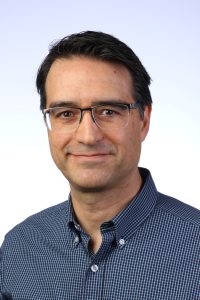 Dr. Tamplin is an Associate Professor at the University of Wisconsin-Madison in the Department of Cell and Regenerative Biology. His lab studies the blood stem cell microenvironment or niche using complementary mouse and zebrafish models. Dr. Tamplin earned his BSc in Biochemistry from McGill University, Canada. He received his PhD in Molecular Genetics from the University of Toronto, Canada, where he worked in the laboratory of Dr. Janet Rossant studying the development of the mouse embryo. For his postdoctoral fellowship, Dr. Tamplin joined the lab of Dr. Leonard Zon at Boston Children’s Hospital and Harvard Medical School. During his fellowship, he developed the first highly specific transgenic reporter of blood stem cells in the zebrafish. This allowed direct visualization of endogenous stem cells in their niche. His lab is now dissecting the function and mechanisms of stem cell interactions with the niche using genetic tools, imaging, and genomics technologies. His lab is also developing a zebrafish model for the pediatric brain tumor diffuse midline glioma.
Lecture Title: Decoding the origins of a pediatric brain tumor: a zebrafish model and single cell genomics
Diffuse midline glioma (DMG), previously defined as diffuse intrinsic pontine glioma (DIPG), is a highly aggressive brain tumor that appears in children between 4-9 years of age and is always lethal. We are developing a zebrafish model of DIPG/DMG that will allow us to directly observe and study early tumor initiation. Our goal is to dissect the mechanisms that allow tumor progression and identify potential therapeutic targets that could lead to novel treatments.
Session 1 – Computational
Dr. Anthony Veltri, PhD
Data Scientist, Bioinformatics Resource Center
University of Wisconsin-Madison
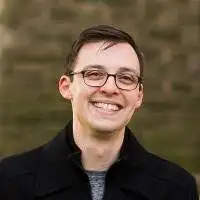 Dr. Anthony Veltri completed a PhD in Molecular Biophysics at Johns Hopkins University, where he used high-throughput sequencing assays to study translation-coupled RNA decay. Anthony transitioned to core facility bioinformatics in 2022 in Milwaukee and Madison, Wisconsin. In his role at the UW Biotechnology Center, Anthony specializes in analysis of spatial transcriptomics and single cell data, collaborating with researchers at UW-Madison and beyond to transforming data into biological insight in support of scientific research.
Lecture Title: Single-Cell and Spatial Transcriptomics Define Eosinophil Heterogeneity during Influenza A Virus-induced Exacerbation of Fungal Allergic Asthma in C57BL/6 mice
Although eosinophils are accepted as transcriptionally heterogeneous in asthma, how allergic inflammation shapes eosinophil states during influenza A virus (IAV) infection remains undefined. We integrated high-resolution single-cell RNA sequencing, spatial transcriptomics, quantitative imaging, and cell-cell communication analyses to profile murine lungs across naïve, asthma, influenza (Flu), and Asthma+Flu conditions. Spatial profiling confirmed condition-dependent eosinophil abundance, increased eosinophil Alox15 expression in allergic conditions, and disease-specific cellular neighborhoods. Collectively, our findings demonstrate that allergic inflammation reshapes both the transcriptional state and spatial organization of lung eosinophils during IAV infection, providing an integrated framework for understanding eosinophil heterogeneity and cellular coordination in the allergic lungs.
Session 2 – Computational
Dr. Yiqiao Zhong, PhD
Assistant Professor, Department of Statistics
University of Wisconsin-Madison

Dr. Yiqiao Zhong is currently an assistant professor at the University of Wisconsin—Madison, Department of Statistics. His research focuses on the scientific foundations of large language models, including internal mechanisms, interpretability, visualization, and theory. Prior to joining UW Madison, Yiqiao was a postdoc at Stanford University, advised by Prof. Andrea Montanari and Prof. David Donoho. Yiqiao Zhong obtained his Ph.D. in 2019 from Princeton University, where he was advised by Prof. Jianqing Fan.
Lecture Title: Do You Interpret Your t-SNE Embeddings Correctly? A Perspective from Map-Continuity and Leave-One-Out
Neighbor embedding methods such as t-SNE, UMAP, and LargeVis are widely used for visualizing high-dimensional data. A common belief is that these methods serve as nonlinear dimension reduction tools which, similar to PCA, learn low-dimensional manifold structures from the data.
In this talk, I will present evidence to show that this view is inaccurate: the embedding maps of t-SNE, UMAP, and LargeVis can exhibit intrinsic discontinuities, leading to unintended topological distortions. A key challenge in analyzing these visualization methods is that the embedding points are obtained by solving highly complicated optimization problems. To address this, I’ll introduce the
leave-one-out (LOO) surrogate, or LOO-map, which captures the properties of the embedding maps. Our analysis identifies two types of discontinuity patterns: (1) global discontinuities, which promote artificial cluster structures, and (2) local discontinuities, which promotes subclusters. To mitigate these issues, I’ll propose two diagnoistic pointwise scores that help detect out-of-distribution samples in deep learning and assisting hyperparameter tuning in single-cell data analysis.
Session 3 – Applications
Dr. Rebecca Smith, PhD
Assistant Professor, Translational Plant Science
University of Wisconsin-Madison
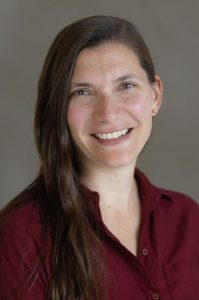 Dr. Rebecca Smith joined the Department of Plant and Agroecosystem Sciences and the Dairy Innovation Hub as an Assistant Professor of Translational Plant Science for Dairy Sustainability in 2024. She received her BSc in Botany (Honours) from the University of Manitoba (Winnipeg, Canada) in 2008 and her PhD in Botany from the University of British Columbia (Vancouver, Canada) in 2014. She joined the lab of Prof. John Ralph as a postdoctoral fellow from 2014-2018 and continued in the lab as a staff scientist until 2024. Dr. Smith is also a Co-Investigator in the Great Lakes Bioenergy Research Center and a Wisconsin Energy Institute Investigator and Energy Expert. Her research focuses on how to genetically engineer the plant cell wall in forage and bioenergy crops to improve plant digestibility, animal nutrition, and dairy sustainability.
Lecture Title: Using plant single cell approaches to address large scale challenges in crop digestibility and sustainability
Genetic engineering of crops to improve or alter key traits, such as plant cell wall digestibility, is often limited by a lack of cell-type specific biochemical pathway data. Uncovering transcriptomic variations at the cell-type-specific level can reveal optimal strategies to improve crops without negatively impacting plant growth and development. In Sorghum bicolor, a forage and bioenergy crop, single cell RNA sequencing and spatial transcriptomics datasets generated with the Gene Expression Center at UWBC allowed us to assemble cell-type-specific cell wall biochemical pathways and understand how differences in transcriptomics might impact cell function.
Session 4 – Technology
Dr. Sean Ronnekleiv-Kelly, PhD
Associate Professor, Department of Surgery
University of Wisconsin-Madison

I am an Associate Professor in the Department of Surgery at the University of Wisconsin (UW) School of Medicine and Public Health (SMPH), Division of Surgical Oncology. My background in oncology in addition to my prior research efforts provide a strong foundation for this role. I developed a passion for science during my clinical training, when I recognized the complexity of cancer and the need for research to achieve breakthroughs for my patients. My commitment to science is strengthened by my patient interactions because of the limited therapeutic options available for these patients with deadly cancers (e.g., pancreatic cancer, cholangiocarcinoma, fibrolamellar cancer). I recognize that immense advancements in treatment for patients with these cancers are needed, and I have devoted my career to basic and translational science to improve the outcomes for these patients. My clinical focus is treating patients with hepatic, biliary and pancreatic cancers, and a main component of my research is PRKACA-fusion driven cancers, which have few treatment options and are known to be highly treatment refractory. These include fibrolamellar carcinoma, a deadly cancer that afflicts young adults, IOPN-associated pancreas carcinoma, and IOPN-associated cholangiocarcinoma. We employ advanced molecular techniques and novel model systems to understand PRKACA-fusion induced carcinogenesis and to uncover therapeutic targets in these deadly cancers.
Lecture Title: Spatial transcriptomics to evaluate the developing tumor microenvironment in PRKACA-fusion driven neoplasms
Intraductal oncocytic papillary neoplasms (IOPNs) are rare tumors that develop from biliary and pancreatic ductal epithelium and progress to lethal cancers. Human IOPNs and IOPN-associated carcinomas are known to harbor the DNAJB1-PRKACA gene fusion; however, the role of the oncogenic fusion in carcinogenesis is poorly understood. We developed a Cre-inducible mouse model of human DNAJB1-PRKACA expression and substantiated that the DNAJB1-PRKACA fusion gene is a bona fide driver of IOPN-associated biliary and pancreatic carcinoma. Using spatial transcriptomics, we discovered that many of the salient features of invasive carcinoma are established at the pre-invasive stage, including evidence of tumor cell metabolic dysregulation, immunosuppressive tumor stroma and upregulation of genes strongly associated with invasive DNAJB1-PRKACA driven cancer in humans.
Session 5 – Technology
Dr. Anindita Basu, PhD
Associate Professor, Department of Medicine
University of Chicago
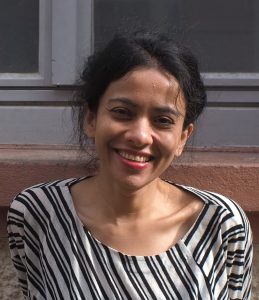 Anindita (Oni) Basu, Ph.D. is an Associate Professor in the Department of Medicine at the University of Chicago and leads a multi-disciplinary research group that uses microfluidics, genomics, and imaging to develop new tools to aid in diagnosis and treatment of disease. Basu obtained B.S. in Physics and Computer Engineering at the University of Arkansas, Ph.D. in soft matter Physics at University of Pennsylvania, followed by post-doctoral studies in Applied Physics and Systems Biology at Harvard University and Broad Institute. Her lab applies high-throughput single-cell genomics to map cell types and their functions in different organs and organisms, including the human heart, gut and female reproductive system in health and disease, development of fish fins and drug resistance in fungal pathogens.
Lecture Title: Capture, Confine, Characterize: Combining Dielectrophoresis and Raman Spectroscopy for Single-Cell Analysis
We present a microfluidic platform that uses ring-shaped electrodes to capture individual cells and droplets by dielectrophoretic force, balancing DEP trapping against hydrodynamic drag to hold targets (micro-beads, mammalian cells, yeasts and cells loaded in aqueous droplets). Once trapped, cells are interrogated by Raman spectroscopy, yielding label-free biomolecular fingerprints that distinguish cell types through shared and species-unique spectral peaks. To push sensitivity further, we are enhancing signal via surface-enhanced Raman scattering (SERS) or hybrid devices with quartz, sapphire or SiN windows, enabling reproducible single-cell chemical analysis on chip.
Session 6 – Technology
Dr. Xinyu Zhao, PhD
Professor, Department of Neuroscience, Waisman Center
University of Wisconsin-Madison
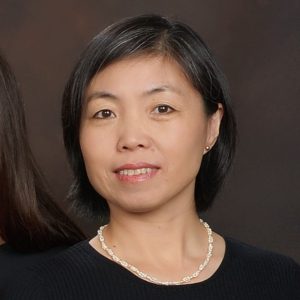 Dr. Xinyu Zhao graduated from Peking University (Beijing) with a B.S. degree in Biology and then earned her Ph.D. degree in Pharmacology from the University of Washington (Seattle). She obtained postdoctoral training on neural stem cells from Dr. Fred Gage at the Salk Institute for Biological Studies (La Jolla, California). Dr. Zhao started her own independent research at the University of New Mexico and then moved to the University of Wisconsin-Madison in 2011. She is currently the Jenni & Kyle Professor in Novel Neurodevelopmental Diseases in the Department of Neuroscience and an investigator of the Waisman Center. Dr. Zhao’s research focuses on understanding the genetic and metabolic regulatory mechanisms underlying brain development with the goal of developing novel therapeutic targets for neurodevelopmental disorders such as fragile x syndrome, autism, and Rett syndrome. Dr. Zhao uses both animal models and human pluripotent stem cells and employ gene-editing, single cell and multi-omics, and quantitative fluorescent imaging methods to interrogate the roles of genes, epigenetic regulators, RNAs, and proteins in neurodevelopment. She has been continuously funded by NIH for over 20 years and has published over100 peer-reviewed manuscripts. She has served on many NIH and other grant review committees and task committees that set research priorities in developmental disorders at national levels.
Lecture Title: Multimodal Approaches to Interrogate Critical Genes for Neurodevelopmental Disorders
Advances in the genome sciences have implicated many risk genes in human brain disorders. Yet, translating genomic discoveries into treatments requires an in-depth understanding of the function of these risk genes across the molecular, cellular, synaptic, circuit, and behavioral levels. My laboratory uses human pluripotent stem cells derived neurons and brain organoids, mouse genetics models, and nonhuman primate models to interrogated functions of genes in mammalian brain development. I will present how we have used single cell Patch-seq, MERFISH Spatial transcriptomics, multiomics, combined with new computation methods such as BOMA (Brain and Organoid Manifold Alignment) and SAMS (Semi-Automated Multielectrode array Spiking sorting), to uncover novel regulatory mechanisms, such as mitochondrial regulations and local cellular context, that may contribute to pathogenesis of fragile X syndrome and autism.
Session 7 – AI Focus
Dr. Bethany Moore, PhD
Scientist, Morgridge Institute for Research
University of Wisconsin-Madison
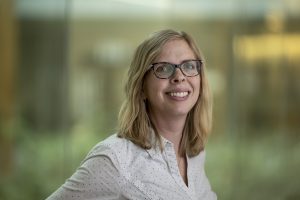 Beth Moore is a Computational Biologist at the Morgridge Institute for Research and studies how genes guide regenerative processes at the single cell level and implements models that mine biomedical literature for the evaluation of scientific hypotheses. After receiving her Bachelor of Science in Biology at North Carolina State University, she joined the research lab of Dr. Shin-Han Shiu at Michigan State University where she used machine-learning algorithms to predict the function of metabolic genes in plants. After graduating with her Ph.D. in Plant Biology and Evolutionary Biology in 2019, she joined the Botany department at UW-Madison in the lab of Dr. Hiroshi Maeda. Here she performed gene co-expression and phylogenetic analyses across grasses and closely related non-grass species to identify novel lignin biosynthesis genes and characterize the evolutionary divergence of lignin pathway enzymes. In 2023 she joined Morgridge Institute as a staff scientist under Dr. Ron Stewart whose lab develops pipelines to analyze ‘omics data and algorithms for text mining.
Lecture Title: Using AI for Biomedical Research: Single cell analysis of retinal organoids and comparative text mining algorithms
In this talk I will delve into the analysis of single cell data from pig retinal organoids and how they compare to data from human retinal organoids. I will discuss how the annotation of cell types can be helped by using large language models (LLMs). I will also discuss automated ways to compare scientific hypotheses using structured algorithms and LLMs.
Session 8 – Applications
Dr. Erica DePasquale, PhD
Assistant Professor, Cincinnati Children’s Hospital Medical Center
University of Cincinnati

Erica DePasquale, PhD, is an Assistant Professor and computational biologist at Cincinnati Children’s Hospital Medical Center and the University of Cincinnati. Her research focuses on pediatric liver biology, multiomics data analysis, and the development of computational methods for single-cell and spatial genomics. She collaborates with investigators across a wide range of disciplines, helping research teams get the most out of increasingly complex biological datasets. Dr. DePasquale has contributed to several open-source bioinformatics tools, including DoubletDecon, CellHarmony, KRSA, and MisTIC.
Lecture Title:Decoding Pediatric Liver Aging with Cross-Species Multiomics
Recent advances in multiomic and spatial technologies have made it possible to study liver biology with unprecedented resolution, yet much of our understanding still relies on mouse models and assumptions about the relationship between mouse and human developmental stages. To explore how liver maturation is conserved across species, we generated single-nucleus RNA-seq and ATAC-seq data from human and mouse livers spanning infancy through adulthood. We performed within-species and cross-species integration followed by differential analyses and elastic net regression, which identified transcriptional and regulatory features associated with maturation across major cell populations. While some of these features were conserved between species, many were species- and/or cell type-specific, revealing important differences in how liver maturation is regulated in mice and humans. Our results suggest that the relationship between mouse and human age is not uniform across liver cell populations, providing new insight into the cross-species assumptions often made in translational research.
Session 9 – Closing Keynote
Dr. André Sousa, PhD
Associate Professor, Department of Neuroscience
University of Wisconsin-Madison

André Sousa is an Associate Professor in the Department of Neuroscience at the University of Wisconsin–Madison. He earned his Ph.D. from the University of Porto, Portugal, and completed doctoral and postdoctoral training in the Department of Neuroscience at Yale School of Medicine under Nenad Sestan, where he studied the molecular and cellular mechanisms of cortical development in humans and other primates. Dr. Sousa’s research combines molecular and cellular biology with comparative genomics across human and non-human primate models to understand how gene regulatory programs shape brain development and give rise to human-specific features of the nervous system. His lab has a particular focus on the molecular and cellular basis of neurodevelopmental and neuropsychiatric disorders, especially Down syndrome, tracing how early disruptions in brain development unfold across the lifespan and using this work to identify potential therapeutic targets.
Lecture Title: Multimodal analyses of prefrontal cortical development, evolution, and disease
The dorsolateral prefrontal cortex (dlPFC) is an evolutionarily derived cortical area in primates critical for high-level cognitive functions and implicated in various neurodevelopment disorders. In this talk, I will discuss some of our recent studies that focused on identifying human-specific features of dlPFC structure and development, and the molecular and cellular mechanisms that are disrupted in Down syndrome during early postnatal dlPFC development.